
Creating interleaved maths worksheets for my (very lucky) 6 year old
Cognitive science + AI
We’re looking for a small number of schools to join our Testbed Schools Initiative as comparison partners. There’s no need to use Eedi, all that’s required is for your pupils to complete three short STAR Maths assessments (autumn, spring, summer). In return, your school will receive £250 and full access to detailed STAR data to help track progress. Contact harriet.walters@eedi.com if you’re interested!
My son, Isaac, is 6 years old, in Year 2, and is legally obliged to enjoy maths.
Over the last few years, he has tried—and enjoyed—both Numbots and Khan Academy to get some extra practice. However, I am increasingly concerned about screen time (bloody Roblox has a lot to answer for). So I wanted him to do some maths with good old-fashioned pen and paper.
As chance would have it, as I was thinking about this, I read an excellent post by Dylan Kane, describing how he created a series of interleaved worksheets to help his students develop fluency in time tables. Here is one of them:
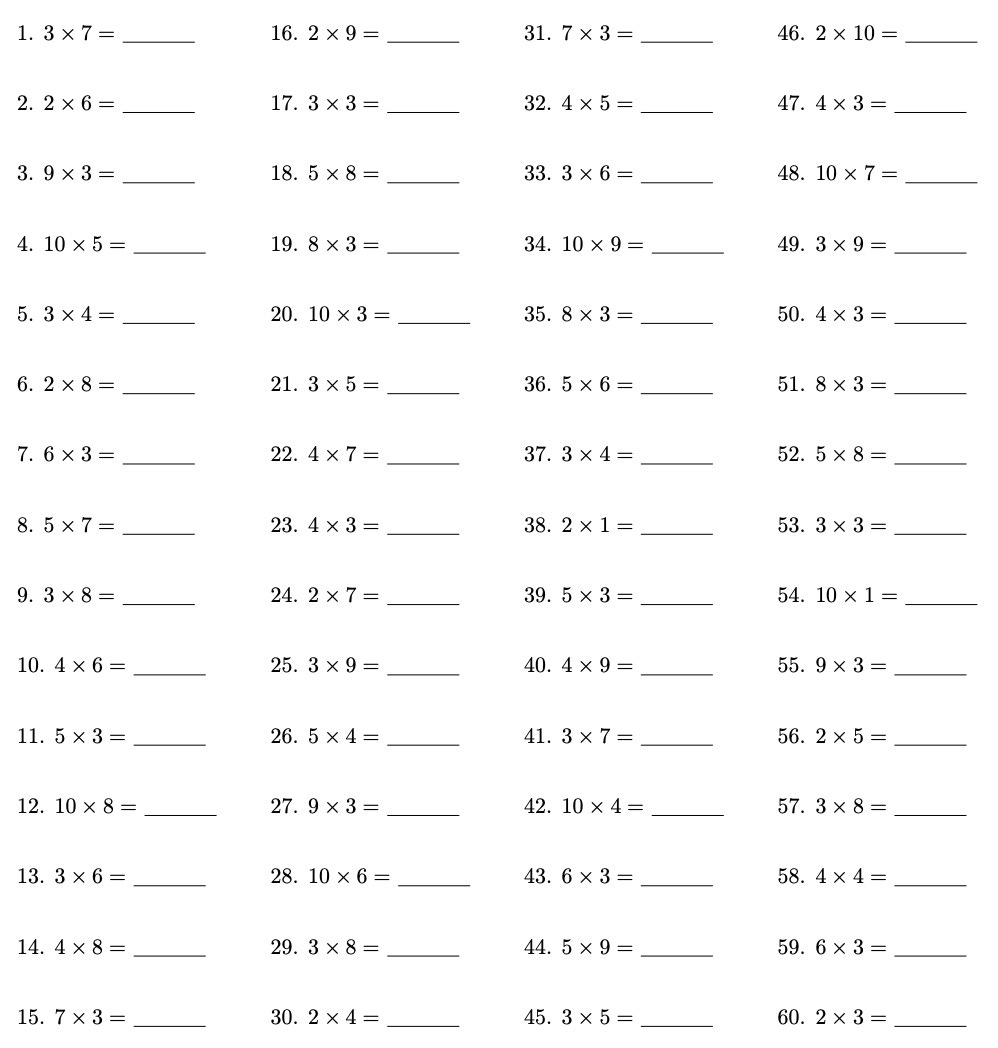
Dylan has created these worksheets so that the odd-numbered questions focus on one times table (the 3s, in the example above), while the even-numbered questions are a mixture of times tables that students have encountered in previous worksheets. This taps into the power of interleaving - one of the Bjork’s desirable difficulties - which has been shown time and time again to improve retention.
Dylan used AI to create these, so I thought I would give it a go for Isaac, using a wider range of concepts.
The Prompt
For this task, I created a Gem using Google’s Gemini:
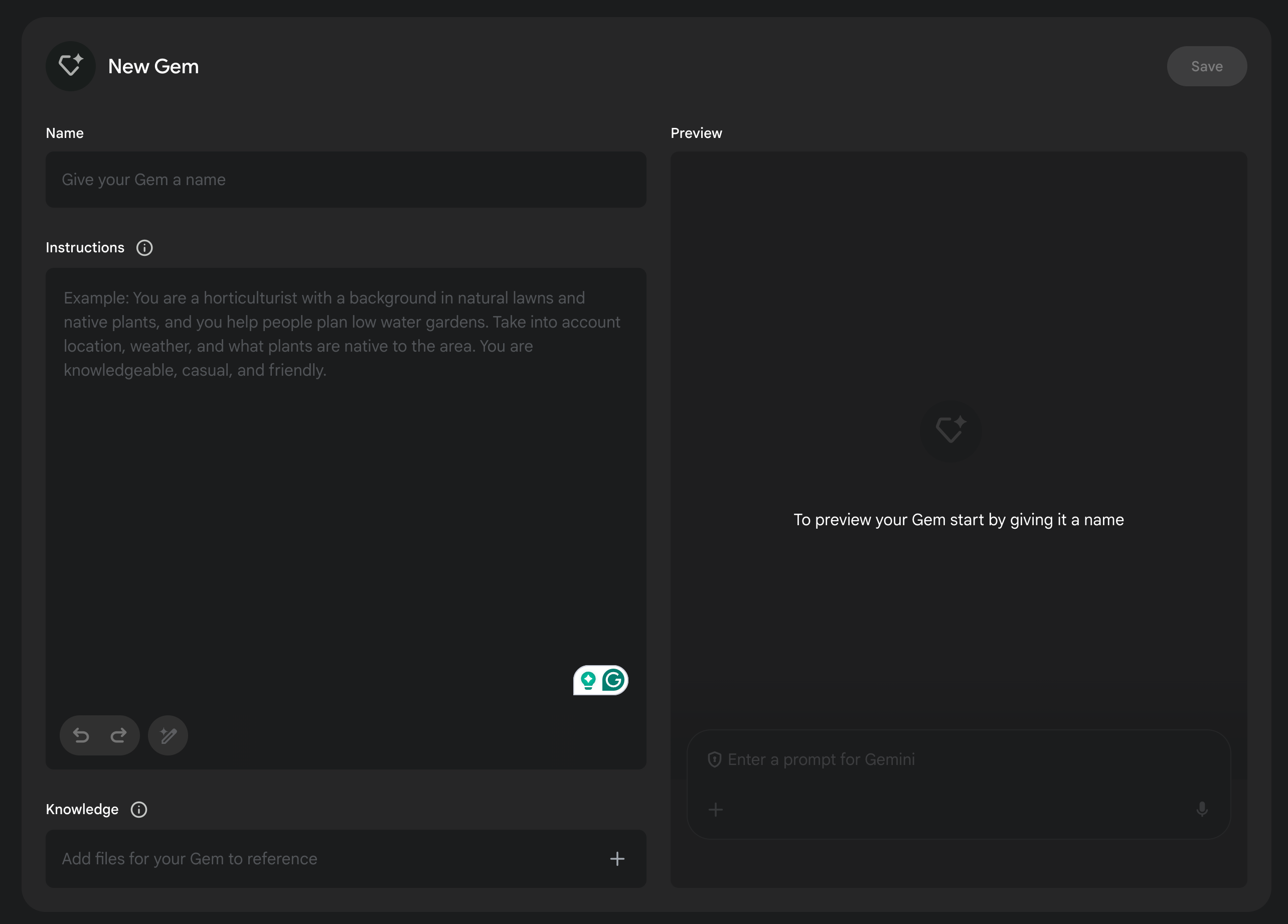
Gemini Gems are customisable versions of Google Gemini that allow you to create tailored AI experts for specific, repetitive tasks.
Here is the prompt I wrote that I pasted into the Instructions box to create my Gem:
Overview
I want to build a Gem that creates a daily series of 20-question maths worksheets for children in Year 2.
Each worksheet is to tap into the power of interleaving.
The odd-numbered questions will cover a specific Theme for that day (ie a new concept that children need practice with).
The even-numbered questions will cover a mixture of concepts from a Pool (a selection of concepts that children have met before).
This Pool of concepts should grow with each day as the previous day’s Theme is added to the Pool.
Format
I want the questions to fit on one side of A4 paper, with 10 questions in each of two columns.
Children can write their answers in the blank space underneath each question.
Make efficient use of the space, with writing big enough to read, but never go over one page for the questions.
The questions should be ordered down the left column first, then the right column (so Q11 is at the top of the right column)
Do not label the columns.
Provide the answers on the second page.
I want the output to be in LaTeX so I can copy the code and generate a 2-page PDF.
The title of the worksheet should be the day’s number and theme. eg. Day 1: 2 times table.
Content
I want the odd-numbered questions to all focus on a Theme that I will state.
I want the even-numbered questions to be selected from the following Pool of concepts, with a maximum of one question per concept:
Pool:
Number bonds to 10 (eg 6 + _ = 10)
Number bonds to 20 (eg 13 + _ = 20)
Write the 3-digit number in figures where there is always a 0 (eg Three hundred and four in figures is)
Write the 3-digit number in words where there is always a 0 (eg 650 in words is)
Identify the value of the digit in a 3 digit number (eg what is the value of the 7 in 672?)
10 more than a 3-digit number (eg 10 more than 382 =)
10 less than a 3-digit number (eg 10 more than 382 =)
Double a single-digit number (eg Double 6 =)
Add 2 or 3 to a 2-digit number that requires exchange (eg 39 + 2 =)
Identify if a 4 digit number is odd or even (eg is 427 odd or even?)
The Pool of each new day’s worksheet should include the themes from previous days, so children can practice the things they have learned in the past. Therefore, the Pool should grow by one with the creation of each worksheet (Day 2’s worksheet will contain the Day 1 Theme, Day 3’s worksheet will contain the Themes of Days 1 and 2, and so on). This means you need to remember the themes from the previous days. Add each Theme to the pool and select 10 topics randomly to create the even-numbered questions. Each time, mix up the order of the concepts from the Pool.
The Themes
I then created a list of 60 skills to cover the themes of each worksheet. I ordered them roughly by difficulty, but also ensured that similar concepts did not appear in too many consecutive days, to keep Isaac on his toes.
Add two numbers within 20 (eg 13 + 6 =)
Subtract two numbers within 20 (eg 13 - 7 =)
Number bonds to 50 (eg 27 + _ = 50)
2-times table multiplication - switch the order around (eg 2 x 5 = , 7 x 2 = )
Number bonds to 100 (eg 27 + _ = 100)
2-times table division (eg 12 ÷ 2 = )
Number bonds to 200 (eg 27 + _ = 200)
5-times table multiplication - switch the order around (eg 5 x 5 = , 7 x 5 = )
10 more than a 4-digit number (eg 10 more than 3182 = )
5-times table division (eg 30 ÷ 5 = )
10 less than a 4-digit number (eg 10 less than 3182 = )
10-times table multiplication - switch the order around (eg 10 x 5 = , 7 x 10 = )
100 more than a 4-digit number (eg 100 more than 3182 = )
10-times table division (eg 120 ÷ 10 = )
100 less than a 4-digit number (eg 100 less than 3182 = )
Multiplying 2 digit numbers by 10 (eg 43 x 10 = )
Add two 2-digit numbers without exchange (eg 32 + 61 = )
Subtract two 2-digit numbers without exchange (eg 39 - 21 = )
Subtract 2 or 3 from a 2-digit number that requires exchange (eg 41 - 3 = )
Add two 2-digit numbers with exchange (eg 39 + 63 = )
Subtract two 2-digit numbers with exchange (eg 31 - 25 = )
Round a 2 digit number to the nearest 10 (eg 53 to the nearest 10 is _)
3-times table multiplication - switch the order around (eg 3 x 5 = , 7 x 3 = )
3-times table division (eg 12 ÷ 3 = )
4-times table multiplication - switch the order around (eg 4 x 5 = , 7 x 4 = )
4-times table division (eg 12 ÷ 4 = )
Add two 3-digit numbers without exchange (eg 312 + 631 = )
Subtract two 3-digit numbers without exchange (eg 359 - 241 = )
Add 2 or 3 to a 3-digit number that requires exchange across a hundred (eg 399 + 2 = )
Subtract 2 or 3 from a 3-digit number that requires exchange across a hundred (eg 401 - 3 = )
Add two 3-digit numbers with exchange (eg 359 + 683 = )
Subtract two 3-digit numbers with exchange (eg 354 - 247 = )
Write four 3 digit numbers in order from smallest to largest where they share the same digits (eg 465, 546, 564, 456)
Round a 3 digit number to the nearest 10 (eg 534 to the nearest 10 is )
6-times table multiplication - switch the order around (eg 6 x 5 = , 7 x 6 = )
6-times table division (eg 12 ÷ 6 = )
7-times table multiplication - switch the order around (eg 7 x 5 = , 7 x 7 = )
7-times table division (eg 35 ÷ 7 = )
8-times table multiplication - switch the order around (eg 8 x 5 = , 7 x 8 = )
8-times table division (eg 40 ÷ 8 = )
9-times table multiplication - switch the order around (eg 9 x 5 = , 7 x 9 = )
9-times table division (eg 45 ÷ 9 = )
Number bonds to 1000 (eg 27 + _ = 1000)
Identify the value of the digit in a 4 digit number (eg what is the value of the 7 in 6072?)
Write the 4-digit number in figures where there is always a 0 (eg Two thousand three hundred and four in figures is )
Write the 4-digit number in words where there is always a 0 (eg 6506 in words is )
Write four 4 digit numbers in order from smallest to largest where they share the same digits (eg 4165, 5416, 5164, 1456)
Round a 4 digit number to the nearest 10 (eg 5314 to the nearest 10 is )
Round a 4 digit number to the nearest 100 (eg 5314 to the nearest 100 is )
11-times table multiplication - switch the order around (eg 11 x 5 = , 7 x 11 = )
11-times table division (eg 33 ÷ 2 = )
12-times table multiplication - 11witch the order around (eg 12 x 5 = , 7 x 12 = )
12-times table division (eg 120 ÷ 12 = )
Identify the value of the digit in a 5 digit number (eg what is the value of the 7 in 61,072?)
Write the 5-digit number in figures where there is always a 0 (eg Twenty-three thousand six hundred and four in figures is )
Write the 5-digit number in words where there is always a 0 (eg 56,506 in words is )
10 more than a 5-digit number (eg 10 more than 31,782 = )
10 less than a 5-digit number (eg 10 less than 31,782 = )
100 more than a 5-digit number (eg 100 more than 31,782 = )
100 less than a 5-digit number (eg 100 less than 31,782 = )
The output
With the Gem saved, and the Themes written, I started the chat:

20 seconds later, Gemini happily spat out some LaTeX, which I copied and pasted into Overleaf (see my post here for more on this) to create the first worksheet:
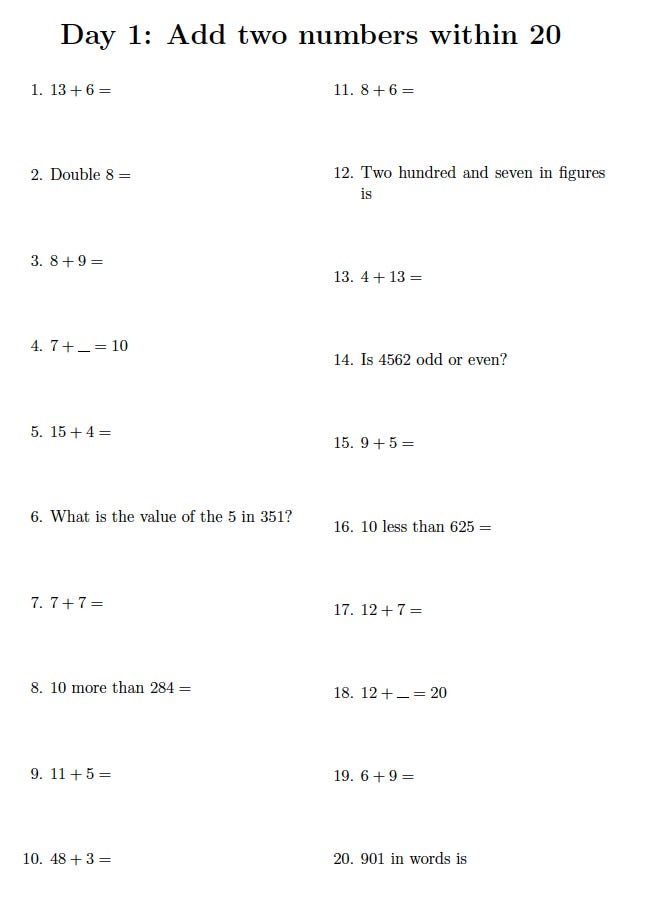
This did everything I wanted. The odd numbers cover the day’s theme, whereas the even numbers are from the Pool of concepts I defined.
Time for Day 2. Back to the chat I went:

20 seconds later, here is the output.
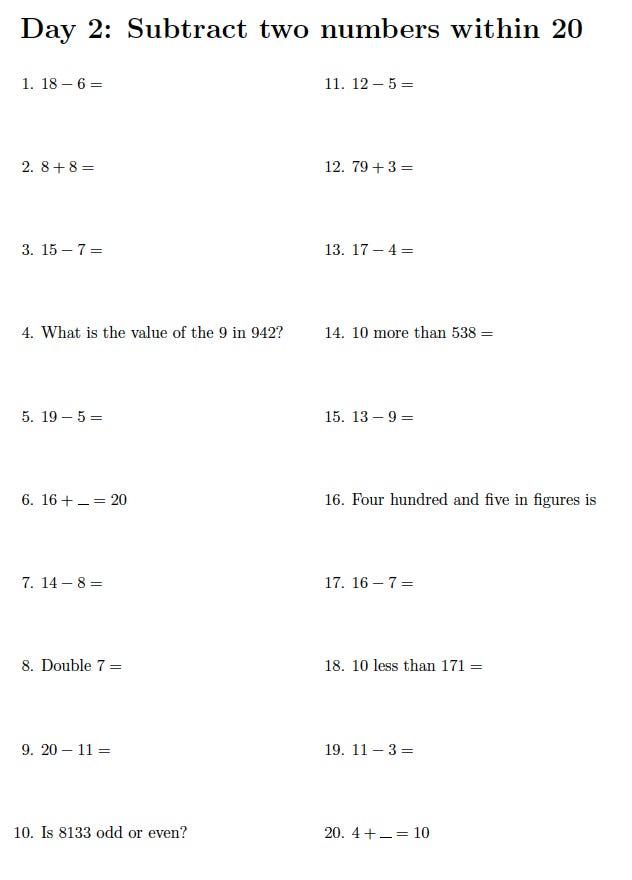
As you can see with Question 2, Gemini added Day 1’s theme to the Pool.
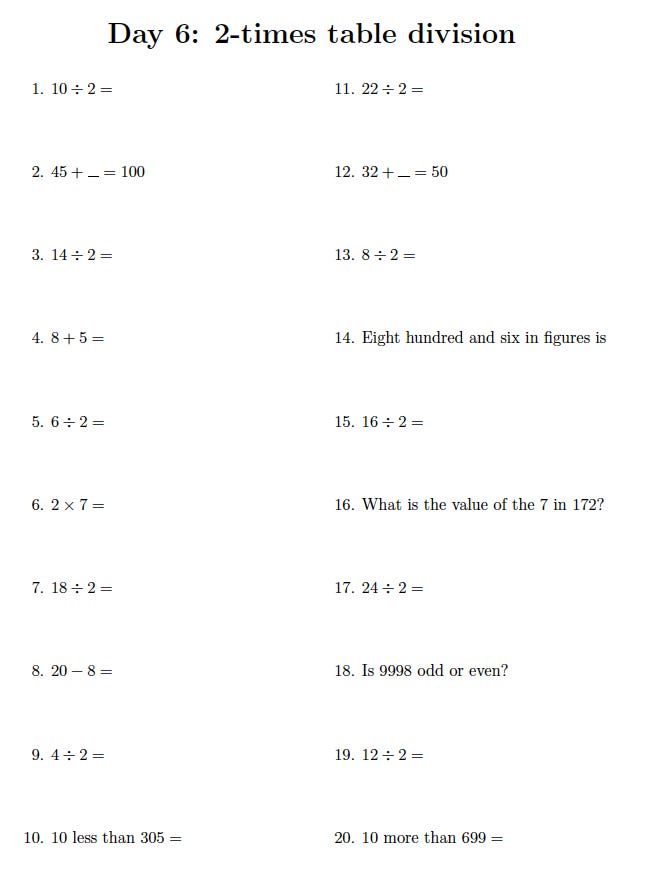
By the time we get to Day 6, a selection of the previous days’ themes has been included:
So what?
I have two questions when I consider using AI for a task: Does it save me time? Does it help me to do my job better?
Let’s tackle each.
Does it help me to do my job better?
Are these worksheets better than I could produce on my own? Not really. Questions on these topics are not hard to write.
Does this save me time?
Undoubtedly, yes. The prompt took a while to write. As anyone who has tried this kind of thing can attest, the initial results are never quite what you intended, and several rounds of back-and-forths ensue. Interestingly, I have come to enjoy this stage of the process; 90% of the time, I find that the issue is due to a lack of clarity in my prompt.
But once the prompt is written and the Gem saved, each worksheet takes about 20 seconds to produce.
Of course, you can use this prompt yourself with whatever age group of students you teach. Just change the Pool and Theme topics, and you are good to go. They would make nice weekly Low-Stakes Quizzes.
Finally, what is Isaac’s verdict on the daily worksheets? Like interleaving itself… mixed.
Would you use this output with your students?
What do you agree with, and what have I missed?
Let me know in the comments below!
🏃🏻♂️ Before you go… 🏃🏻♂️
Check out my brand-new 16-part book series, The Tips for Teachers guide to… here.
Thanks so much for reading, and have a great week!
Craig
What a great post. I am trying to have my older students take responsibility for their learning by identifying the skill/s they need to enhance and commit to practising those over the ensuing week. Some students don't have the awareness yet to attempt this and I have been struggling to make worksheets that didn't feel too ad hoc (I've never been satisfied with what I have provided them). Your approach seems like a superb use of AI to do the heavy lifting. I will use your prompt as a model for ChatGPT and instruct it to do the same for my year 9 students for linear algebra. Well done, and thanks for your hard work.
Thanks for sharing this! And for the shoutout. I didn't know about Gems and I am going to work on creating a few. I just gave it a shot and the formatting isn't great. I've been using Claude when I generate worksheets so far (not for any particular reason, I just tried it and it has worked well so I've stuck with it). It is definitely some up front work to get these systems working, but there's a lot of potential if they can work reliably. Your examples are really helpful -- I've relied on computer-based practice for interleaving because it's been the easiest way to create interleaved assignments but I'd love to be able to do it on paper as well, so this is a great use case. Thanks again!