
3-Read Friday #96
Visualisers, coaching, and Kris Boulton

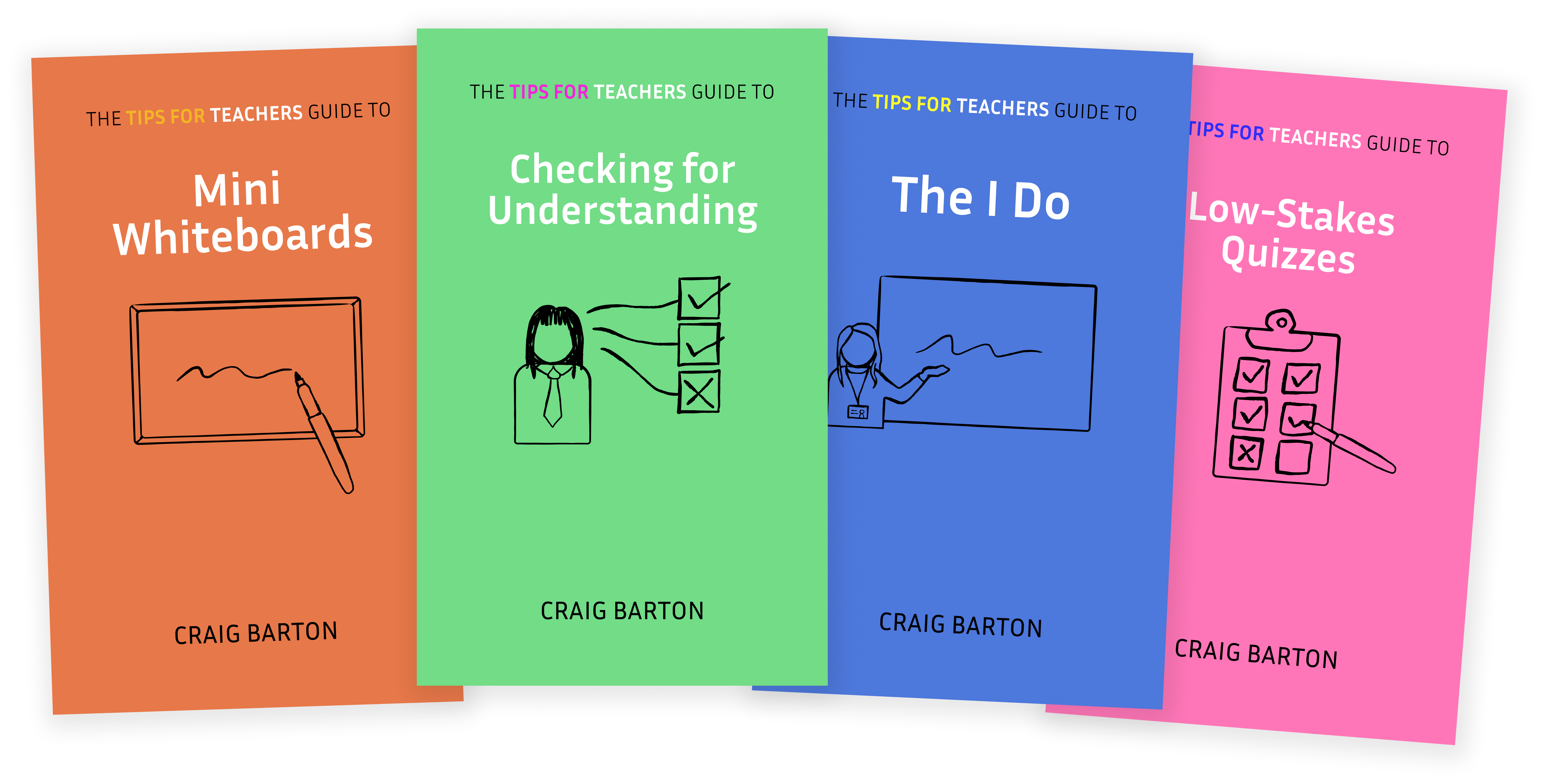
Before we begin, you may want to check out my brand-new 16-part book series, The Tips for Teachers guide to… here. Book 14 on Purposeful Practice and Problem-Solving is now available.
Here are three blog posts that I found interesting this week.
1. Visualisers: The Classroom Tool I Can’t Teach Without by Anna Sutton
I am the world’s biggest mini-whiteboards fan. But here is a post paying tribute to another essential classroom tool - the visualiser. Anna argues that visualisers are powerful tools for reducing cognitive load and enacting Rosenshine’s modelling principles because they show pupils exactly what success looks like in the precise context where they’ll work.
2. Questioning Coaching by Adam Boxer
It’s annoying for me to keep featuring Adam in this newsletter, but he keeps producing quality stuff. Here, Adam takes a critical look at instructional coaching, arguing that while it has a strong evidence base, its effective implementation faces substantial psychological, definitional, financial, and practical barriers that schools often underestimate.
3. Regularities, All the Way Down by Becky Allen
Becky takes a deep-dive into the work of my good friend, Kris Boulton, arguing that cognitive science and instructional theory constrain what good teaching looks like, but they cannot replace the granular, idea-by-idea work of figuring out how to teach each specific concept well.
Have a great weekend… and a fantastic Christmas!
Craig
The Becky Allen piece on Kris Boulton's work gets at something really important that broad instructional frameworks often miss. Cognitive science gives useful constraints, but it can't prescribe the micro-level decisions about how to sequence or represent a particular concept like fractions or quadratics. I've seen teachers apply general principles without doing that granular work and end up with lessons that technically follow the 'rules' but still confuse students. The tension betwen theory and specificity is where the actual craft lives, and Boulton's focus on concept-by-concept desgin feels like the right level of detail.