3-Read Friday #107
Three reads to celebrate AI Literacy Day
Something a bit different this week to celebrate AI Literacy Day, I asked two of my Eedi colleagues - our Chief Impact Officer, Bibi, and my co-founder and Chief Data Scientist, Simon - to each pick out an article, and I have selected the third.
1. Bibi’s pick: Benchmarking the Pedagogical Knowledge of Large Language Models by Maxime Lelièvre et al - the chart and the paper
I chose this because most AI literacy conversations focus on how to use the tools; the harder question is whether AI actually knows how to teach. This benchmark tests leading models on real pedagogical tasks: spotting misconceptions, choosing instructional strategies, applying learning theory. The finding that general language ability doesn't guarantee teaching effectiveness matters for every educator evaluating AI in their classroom.
2. Simon’s pick: It’s Time to Embrace AI Literacy for Kids by Kiryn Hoffman, Erin Mote & Lynne Parker
At the Stanford AI+Education Summit, there was a lot of discussion about the risks of AI, but not many practical next steps. Erin Mote was an exception to that, so I sought out what she had to say about AI literacy. The article starts with the standard polarised society framing, which is a great summary if you are not familiar, but the good bit is towards the end, concrete examples of AI literacy solutions you can access now.
3. My pick: Free Do Now - Maths App - Year 7 - Spaced Retrieval by Mr Salisbury
Teachers are increasingly feeling empowered by AI to create bespoke resources for their classes (I wrote about this in a post entitled The Democratisation of Resource Creation). I think this is a really positive trend. Here is another example, from Mr Salisbury, who has created - and shared! - a resource for building spaced retrieval opportunities into his Do Now.
Have a great weekend!
Craig
🏃🏻♂️Before you go, have you… 🏃🏻♂️
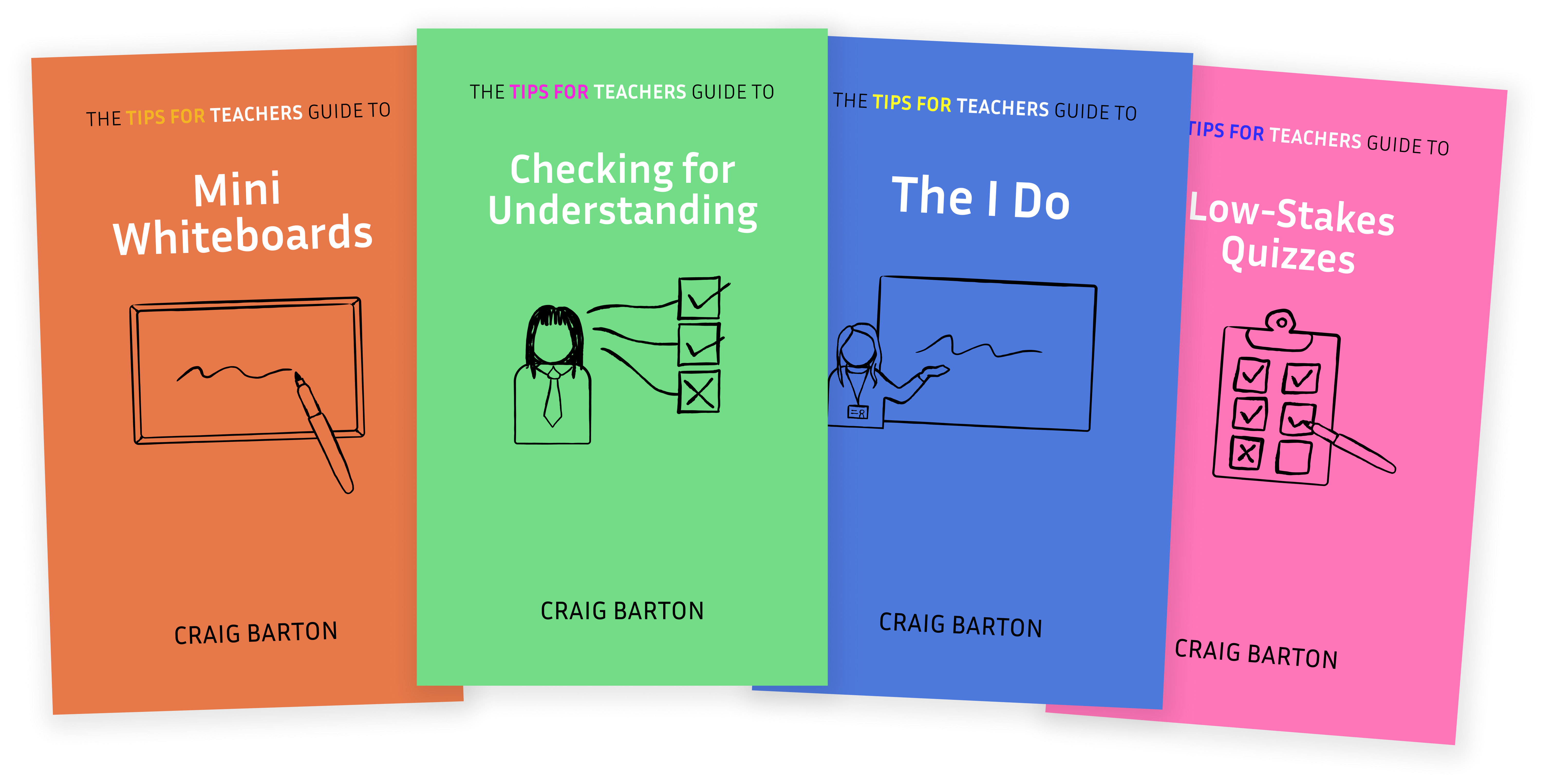
… checked out my brand-new book series: The Tips for Teachers guides to…
And checked out my all-new, ad-free, Mr Barton Maths website